


Discover the Joys of Pond Gardening
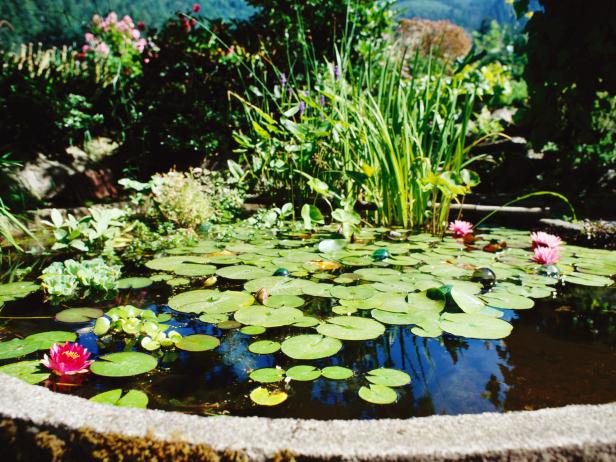
"A garden is where the elements in nature collide, creating a wondrous peacefulness that we gardeners revel in," says master gardener Paul James. "So how do you turn the sounds of silence into a symphony? Just add water."
Chris Moore, owner of Moore Haven Water Gardens, is clear about why she's been water gardening for more than 25 years: "Water gardening is the easiest way to garden. Think of it this way — you don't have to weed."
Simplicity is just one of the things she adores about water gardening. "It also brings tranquility to the garden," she says.
But before starting your own soothing spring, there are a few details to consider. Determine the size and shape of your pond to help you select the appropriate plants. Also think about how much light is available. Lots of sunshine can help keep the plants growing, the fish eating, and the algae in check. Plant life does well in a foot or two of water, but if you want fish, you need much more depth to prevent birds from plucking the fish from your pond.
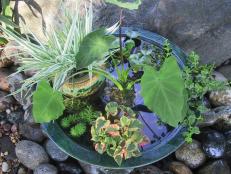
When choosing plants for your pond, select varieties that grow best in your climate. Marginal and bog plants do best along the pond edge, while some sink to the bottom.
To plant a water garden, just lay the floaters on the water surface. Chris recommends dropping the plant in the water in the shallower section of the pond. Floaters, like this water hyacinth, play an important role in filtering your pond.
Potted water plants prefer a rich garden soil to the lighter, store-bought mixes. Layer the rocks and pebbles along the surface of the pots to help weigh the containers down. Then slowly submerge the plants into the pond. As the plants become more established, you may want to move them deeper into the pond.
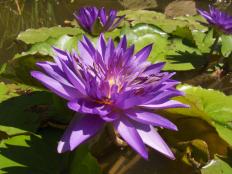
Most plants acclimate without additional fertilizers. Exceptions to the fertilizer rule include water lilies and lotus. If you feed these water beauties regularly, you'll be rewarded with a display of delicate floating blossoms.
Water gardens can be relatively maintenance-free. By including fish in your pond, you create your own private ecosystem. Fish provide nutrients for the plants, and the plants oxygenate the water for the fish. Keep in mind that big fish like koi need a large pond, and smaller fish are happy wherever you put them. "The fish bring the pond to life with their swimming and movements around," Chris says. "Plus, they eat the mosquitoes that find your pond."
Water plants thrive on the nutrients provided by the fish. So if you cover the pond with about 65 to 70 percent plant material, less sunlight will reach the water, thus discouraging algae growth. Also, pond gardens shouldn't be drained often. Once you find the natural balance of your water garden, nature will take care of the rest.