
Outside Doors Open up Remodeling Possibilities
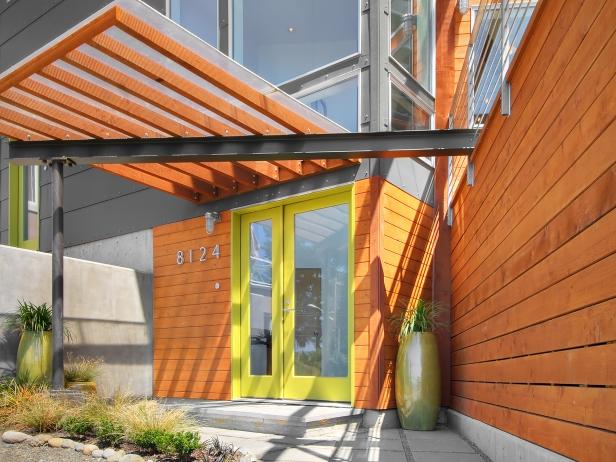
Whether you are upgrading an existing door or building a new doorway, changing the exterior door will give your home a whole new look.
- A
- A
- A
Print Options
CloseE-mail This Page to Your Friends
xSuccess!
A link to %this page% was e-mailed
Figure IMaterials and Tools:
hammer
pry bar
utility knife
tape measure
solid-core door
wood shims (if necessary)
4-foot level
carpenter's pencil
pressure-treated lumber (if necessary)
cut nails
hammer
cement screws
drill
latex caulk
wood filler
fourpenny nails
wood trim (if not salvaged from original door)
door hardware (doorknob and dead bolt)
Steps:
1. Using a hammer and pry bar, remove the hinge pins and lift out the old door. Next, unscrew the hinge leaves and remove them from the jamb. Using a utility knife, score the caulking between the molding and the brick to break the seal. Use a pry bar and hammer to remove the brick mold (figure A). Pry away the door jamb, framing and threshold. Finally, scrape away old caulking left on the brick.
2. For taking measurements: To calculate the exact dimensions, measure the width between the side jambs, the head jamb to the seal under the old threshold (figure B) and the thickness of the wall. The rough opening should be at least one inch wider and taller than the outside frame dimensions of the door to be installed. Be sure to carefully measure. Also, decide on a right-handed or left-handed swing.
3. With the shipping brackets still attached, carefully set the door in place, centering it in the opening (figure C). If necessary, add shims under the lower side jamb until plumb and level. With a carpenter's pencil, mark a line at the top of the door on the brick lintel, then carefully remove the door. Use the level to mark plumb lines on the brick on both sides of the opening (figure D). These lines will serve as guides for the molding of the new door. Remove any remaining pieces of paneling around the door to ensure a clean opening.
4. For a very rough opening — one that has concrete or cinderblock as the jamb — pressure-treated lumber may be necessary. For this, take the measurements for the side jamb and cut the board to length. After checking for plumb, install the board using cut nails (designed for fastening to masonry). This board will act as additional framing for the new door (figure E).
5. Begin installation by first running a thick bead of latex caulk along the subseal at the bottom of the door opening. Then lift the door into the center of the rough opening, positioning the bottom seal first, then tilting the door into place (figure F). Check for plumb and shim the frame as necessary. Secure the door with cement screws at each shim location. For wood frames (which are most cases of door framing), you can use casing nails. Trim off excess shims using a utility knife and pry bar.
6. Remove the shipping brace and test the operation of the door (figure G). Finally, attach the long-anchor screws (provided with the door) through the hinges and into the door framing.
7. To seal the exterior of the door, run a bead of paintable latex caulk around the entire door. Fill holes left by the screws with wood filler. Once the caulk and wood filler have dried, you can apply paint to the door and wood trim to match the color of your home. Inside, insert fiberglass insulation into the voids between the door frame and opening. Attach trim to the door, fastening with fourpenny finishing nails (figure H). You may be able to use the trim from the original door. Finally, attach the knob and dead bolt to the new door.

This project costs around $200 and takes around five hours to install.
We Recommend...
Touch-Up Painting a Garage Door
Host Henry Harrison shares tips for touching up the paint on a garage door using a touch-up sprayer.
Dressing Up Closet Doors
Designer Richard Anderson shares tips on how to enhance your closet doors.
See Also:
Shop Home Decor Products
Shop home decor products from rugs to mirrors, lamps and more