



6. Clamp the first nailer board on-edge to the workbench and use the miter to cut a 45-degree angle in one end (figure E). Put on safety glasses when sawing or working with power tools.7. Transfer the measurements from the tick stick to the nailer board and mark a 45-degree angle on the opposite end of the previous cut using a carpenter's square (figure F). To make the corresponding cut, turn the miter saw 45-degrees in the other direction.
8. Since the miter box isnt wide enough to cut the shelving, use the nailer as a guide for the length when cutting your shelf. Place the nailer board you just cut on top of the board you're using for a shelf, mark the length, then use a carpenters square to mark a 45-degree angle along the broad part of the shelf (figure G).
9. Clamp the shelf in place and make the cuts using the miter saw (figurer H). Even though you can't use the miter box as a guide, using the miter saw allows for more precise control.
10. Next assemble the shelf and nailer. Clamp them into place, with the nailer on edge (figure I), and attach the shelf by driving nails through the top and into the edge of the nailer. Set the nails below the surface with a nail set.


11. Measure the crown molding against the assembled shelf and nailer unit and mark to cut (figure J). Flip the molding over and continue the mark across the molding. Clamp to the workbench and cut to size.
12. Lift the assembled shelf into place and use an 8-inch block (or whatever length you've decided on) to keep the spacing consistent. Make sure the tape strips marking the wall studs are visible. Have someone hold the shelf while you drill pilot holes through the nailer board and into the wall studs. Secure the shelf by driving screws into the holes (figure K).
13. Place the molding you cut in position, pre-drill holes into the studs and secure the molding with nails (figure L).
14. Build another shelf to fit the next wall. Mount the shelf and cut another piece of molding to length as before. Highlight the edge of the molding with a pencil and use a coping saw to cut away the meat of the molding (figure M).
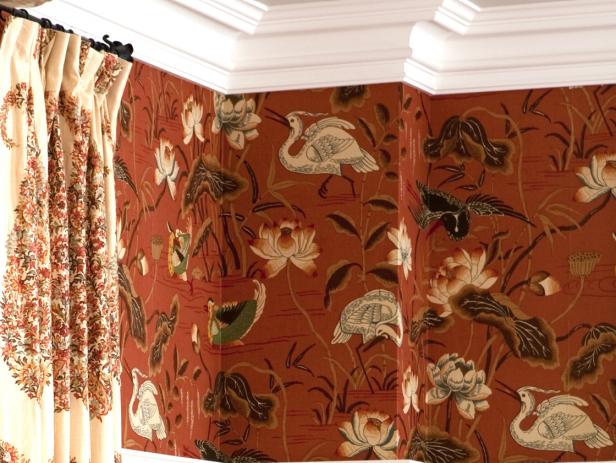
15. Trim the molding with the coping saw so it fits seamlessly against the first piece in the corner (figure N). Secure molding as before.
16. Once all shelves are up, run a bead of non-toxic caulk along the joints and wipe away the excess caulk with fingertip (figure O).