Moving Houseplants Outside
Discover the best way to prepare houseplants for a move outdoors.

- A
- A
- A
Print Options
CloseE-mail This Page to Your Friends
xSuccess!
A link to %this page% was e-mailed
Master gardener Paul James discusses how to prepare houseplants for the outdoors and where to place your plants so that they not only survive, but thrive.
Knowing exactly when to make the move is a guessing game, but generally it's safe to move houseplants outdoors when nighttime temperatures are consistently in the 50s. "However, I usually wait two to three weeks beyond the safe date just to make sure," says James, "especially since the weather here can change very quickly and very dramatically." When the time is right, he grabs a giant dolly, loads up his houseplants and moves them outside.
Tips
Once the plants have been watered, it's time to douse them with a watering can of compost tea. James mixes in droppings provided by his daughter's rabbit, Buns. "Actually, this is something I do every two to three weeks," says James, "and thanks to Buns, I've got a never-ending supply of this nutrient-packed, nitrogen-rich stuff." In lieu of compost tea and droppings, you can add some granular fertilizer, in particular, a timed-release fertilizer designed specifically for houseplants. Mix the fertilizer into the top one or two inches of the potting mix.
Location, location, location
Selecting the right spot for your houseplants is important because not all of them can tolerate full sun. It's a common misconception that tropical houseplants enjoy a full sun location, but many actually thrive in the shade cast by tall trees. This Alpinia, which is a type of ginger, can handle a couple hours of morning sun, but after that, it needs nearly full shade.
Unfortunately, this Adenium obesum or 'Desert Rose' didn't fair as well, but it should rebound in no time.
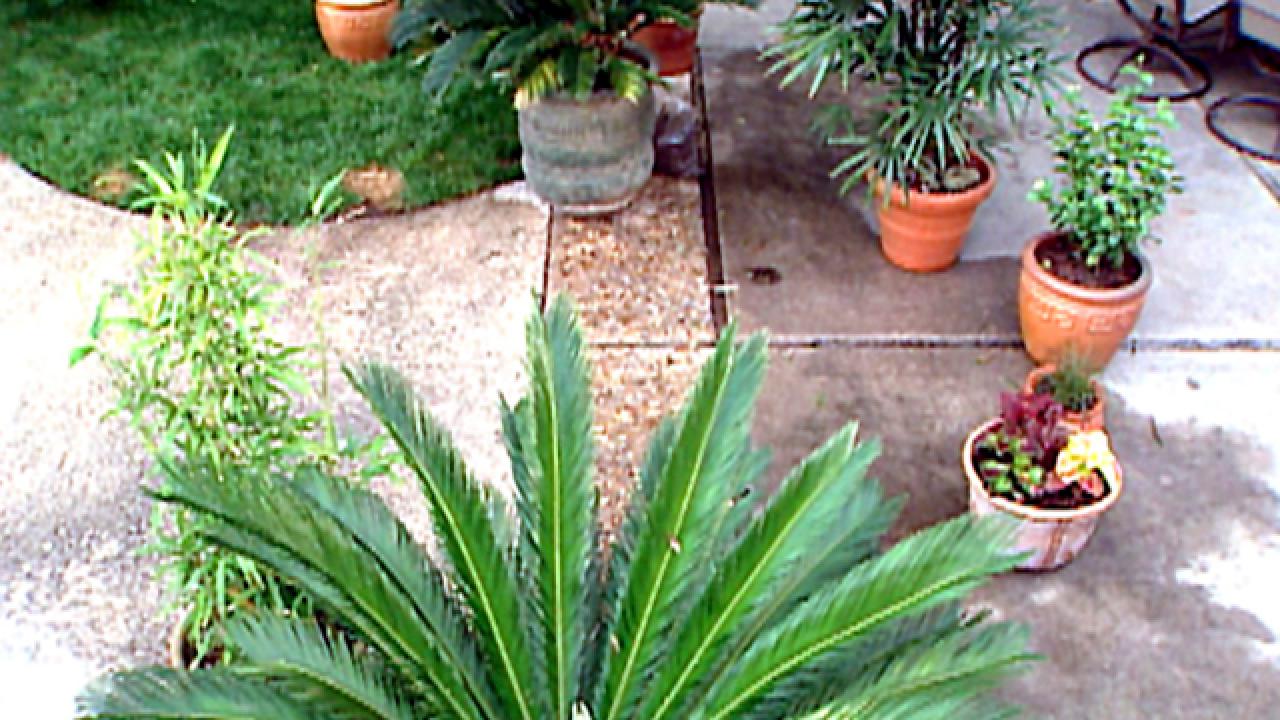
Other plants such as these sago palms can take full sun, but it's a good idea to get them acclimated first by placing them in a semi-shady spot for a week or so before placing them in full sun. Realize that you may have to move some plants around until you find just the right mix of sun and shade, especially if you aren't sure what your plants prefer.
A final tip
If you put potted patio plants on saucers to prevent stains from forming on surfaces, keep in mind that the water that collects in those saucers creates the perfect breeding ground for mosquitoes, so get in the habit of draining them right after you water.
"And if you're wondering whether you should move all your houseplants outside," concludes James, "the answer is almost always 'yes', because they, like me, would much rather be outdoors than in."
We Recommend...
How to Grow Indoor Flowers for a Holiday Bouquet
Grow a gorgeous indoor wintertime bouquet by planting bulbs in water or potting soil. Start new bulbs every 10 days for a...
Six Types of Flowers to Attract Helpful Insects
Learn about types of flowers that will lure beneficial insects to your lawn and garden spaces, helping them to flourish.
(6 photos)Plants That Produce Pre-Season Blooms
These beauties can help brighten the dull landscape between winter and spring.
(11 photos)From our Sister Sites:
- Plant Variety (from DIY Network)
- Plants for Sunny Sites (from HGTVGardens)
- Beautiful Flowers and Shrubs (from DIY Network)
Shop Outdoor Products
Shop outdoor products from fire pits to outdoor furniture, planters and more