

A Welcoming Garden for Wildlife
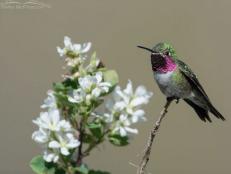
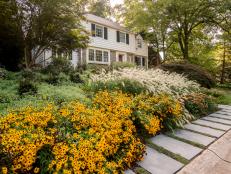
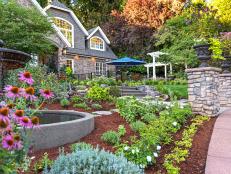
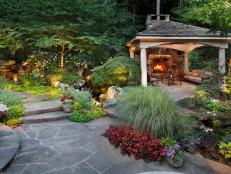
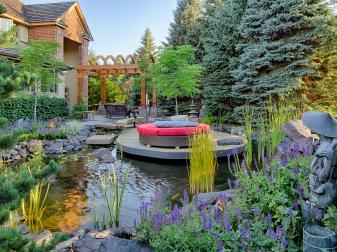
Make your garden a friendly and welcoming garden for wildlife.
- A
- A
- A
Print Options
CloseE-mail This Page to Your Friends
xSuccess!
A link to %this page% was e-mailed
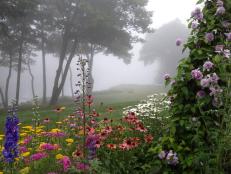
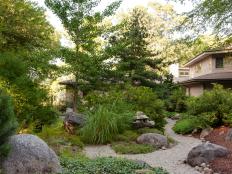
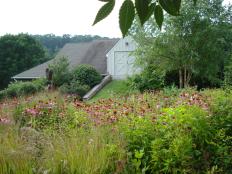
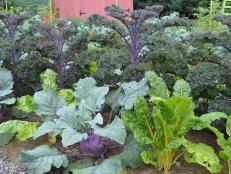
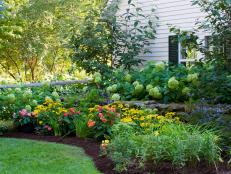
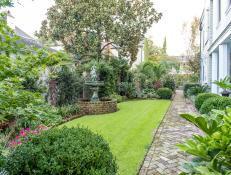
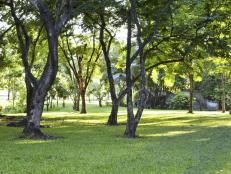
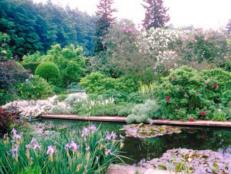
John and Barb Rion in their gardenBarb Rion carved out her garden from an entanglement of undergrowth beneath the large trees on her gently rolling two-acre property in Dayton, Ohio. The trees shelter wildlife visitors to the ornamental garden. Large flower and shrub borders around the expansive yard are filled with plantings that bloom or add texture to the yard from early spring through fall. Close to the house is a large kitchen garden, where her husband, John, grows rows and rows of garlic. The potager contains beautiful specimens of upright, columnar boxwoods to lend height.
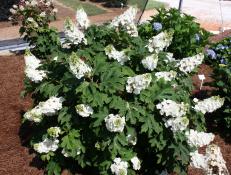
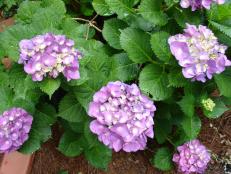
An arbor divides the kitchen garden from a long raised perennial border that is filled with poppies in June. Oakleaf hydrangeas line the long driveway, and a shady border contains hostas, astilbes and other shade-loving plants woven in a tapestry of mostly green textures. Another border along the back parking area is at its best in the fall of the year with an abundance of colorful perennials.
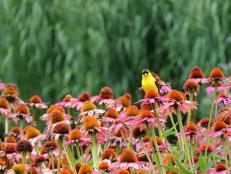
Even though deer are frequent visitors to the garden, Rion takes it all in stride. Dead trees are left for owls and other birds to find sanctuary and nesting places. In addition to this garden, Rion owns a farm where she and her son produce gourmet vegetables for local restaurants.
Bear's Breeches (Acanthus mollis)
The plant: Native to Southern Europe, this fast-growing plant is prized for its bold, tropical-looking foliage. The perennial spreads by aggressive underground roots. Flowers are tubular whitish with traces of lilac or rose and spiny green bracts atop tow to three foot stems in late spring. Leaves are large and evergreen. Hardy in USDA Zones 7-8
How to use it: Lovely in a shade border with hostas and ferns.
Cultivation: This plant does best with a north or east-facing exposure. Cut back the flower stalks after blooming. Divide clumps between October and March. Make sure you can restrain this plant, as it is aggressive.
Source: Plant Delights Nursery, Inc.
Dwarf Astilbe (Astilbe 'Sprite')
The plant: Named as the 1994 Perennial Plant of the Year by the Perennial Plant Association, this herbaceous perennial produces 10-inch-high foliage and 18-inch, shell pink flowers formed in soft plumes in early to mid-summer. The deep, rich green leaves are finely dissected. Hardy in USDA Zones 4-8.
How to use it: A great, front-of-the-border plant for shady spots. Combine with hostas and ferns or use 'Sprite' as an edging along a path.
Cultivation: Plant in moist, fertile well-drained soil in part shade to shade in South and part sun to full sun in North. Keep evenly moist, and do not allow plants to dry out. Astilbes are heavy feeders.
Source: Bluestone Perennials, Inc.
Columnar Boxwood (Buxus sempervirens 'Graham Blandy')
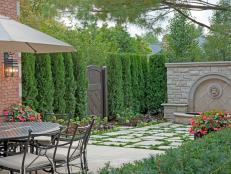
The plant: A very narrow, upright form of common boxwood. The columnar, vertical shrub grows about four to six inches a year and in ten years will reach a height of six feet by one and a half feet wide. A mature plant may reach 15 feet in height with a width of two feet. This dense, dark evergreen is hardy in USDA Zones 5-9.
How to use it: Very striking as an accent in the garden. Excellent for flanking an entrance or marking the corners or centers of a parterre. If you have a narrow space that needs an evergreen filler, this boxwood would be a great choice.
Cultivation: Boxwoods need good drainage and even water during dry periods. Plant in sun or semi-shade.
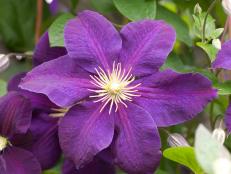
Source: Rare Find NurserySpecies Clematis (Clematis integrifolia)
Garlic (Allium sativum)
The plant: Growing one to two feet tall at maturity, garlic plants produce an underground bulb that is usually divisible into six to 20 segments called cloves. Treat as an annual.
How to use it: Garlic cloves have for centuries been used for flavoring dishes and for medicinal purposes. The bulbs are also useful for warding off vampires. Garlic braids and wreathes are ornamental, especially for fall decorations.
Cultivation: Plant an individual clove flat side down about three inches deep in well-worked soil. In most climates, a fall planting is preferred. In very cold places, mulch heavily. Harvest the following summer when the tops fall over and turn brown. Dry the bulbs for a week out of the sun, and then story in a dark, dry place.
Source: The Garlic Store
We Recommend...
Caring for a Cutting Garden
The summer cutting garden is filled with big, burly annuals, many old-fashioned or heirloom.
Favorite Plants for a Garden Decorator
Interior designer Susanne Hudson lists her favorite plants in her 3-1/3-acre garden.
Attracting Birds and Butterflies
Bird, butterflies and hummingbirds are as beautiful as they are practical for the garden.
Shop Home Decor Products
Shop home decor products from rugs to mirrors, lamps and more