


 You're subscribed!
Mums 101: When To Plant and How To Grow Chrysanthemums
Mums can give you color until the cold comes. Here’s how to make the queen of autumn gardens thrive.


Chrysanthemums, also known as mums, are the star of fall gardens. They're usually the last plant to bloom before frost, ushering your garden into the big sleep of winter with a last bang of color.
There are many species of mums, hundreds of varieties and thousands of hybrids, with blooms that can be as frilly as a cheerleading pompom or as dainty as a daisy. Mums come in a rich range of colors including white, yellow, orange, lavender, purple, red and bicolor. They're easy-to-grow and can be used in beds, borders and containers. They attract butterflies in the fall and make great cut flowers, lasting up to two weeks in a bouquet.
Chrysanthemums are an ancient flower, cultivated in China as far back as the 15th century. Flowers can be as small as a quarter or big as a dinner plate. They bloom in various shapes, according to variety.
Technically mums perennials, but they are often grown as annuals. Their survival depends on when you get them and where you live. Garden mums, also known as hardy mums, are perennial mums. Cut-flower chrysanthemums, like spider mums or football mums, are perennials in Zones 5 to 9.
Then there are the annual mums, yellow daisy (Chrysanthemum multicaule) and painted daisy (Chrysanthemum carinatum or Chrysanthemum tricolor). They aren't winter hardy and are grown as house plants.
Be sure you are buying the right mum for your purposes. Want a blooming plant to decorate the house for the Thanksgiving guests? Buy that foil wrapped pot of chrysanthemums in the floral section of the grocery store. Want a mum that will live for years in your yard? Get a mum from a nursery or garden center that's suited for the great outdoors.
Botanical Name: Chrysanthemum spp.
Common Names: Garden mums, garden chrysanthemums, mums
Hardiness Zones: 5 to 9 (Some varieties to Zone 4)
Bloom Time: September to frost
Chrysanthemums grow a foot to 3 feet tall and get a foot to 2 feet wide, depending on the type.
Planting Mums
When to Plant
If you're using a mum as a perennial, plant in early spring or in the fall at least six weeks before the first killing frost. You'll find smaller plants for sale in the spring than you might in fall. They likely won't be budded or flowering, and the color selection may be minimal. But if you plant hardy mums in spring, you'll be rewarded with a strong color show in years to come because they'll have a season of warm weather to grow a strong root system. That root system is key to their long-term survival.
If you want to wait to for the wider color selection available later in the season, plant hardy mums in early fall. This gives them enough time to develop strong roots before winter. Mulch hardy mums before a hard, killing frost. Add more mulch once the ground freezes. Protect their shallow root systems from a killing cold.
Many gardeners plant their hardy mums too late in the fall for them to survive the winter. Mums have shallow root systems, and as the top few inches of soil freeze and thaw throughout winter, the expansion and contraction pushes the roots of newly planted hardy mums out of soil. This displacement is called frost heave or heaving. If hardy mums experience frost heave, roots can freeze and die, along with the rest of the plant.
If you're using chrysanthemums as an annual for a pop of fall color to boost your late season garden, plant them when they're blooming in later summer or early fall.
Where To Plant
Mums grow best in full sun. They're at their best when they get six to eight hours of direct light. Give them too little sunlight, and you'll get a weak plant that produces few flowers. So choose your mum-planting place wisely.
Mums are happiest in rich, well-drained soil. Add compost or other organic material to your soil when you plant to give your mum the best shot at being a strong, healthy plant. Soil must be well-drained or your mums will rot.
Caring for Mums
Water chrysanthemums frequently because they have a shallow root system that gets thirsty fast. If the weather's very hot and the rain scarce, they may need daily watering at the height of their summer growing season.
Mulch around mums to keep the soil moister longer. Aim for a 2-inch-thick layer, unless you have sandy soil or a garden where summers really sizzle. Then it's OK to use up to 3 inches of mulch. A good mulch layer can also help protect plant crowns in winter.
Prune chrysanthemums to make the plant branch and become short and sturdy instead of growing leggy and weak. Pruning mums will also make them bloom more profusely. To do this, remove about 1 inch of the branch tops early in the season. Then continue trimming the tips of stems every two weeks until midsummer. You don't need to prune mums grown as annuals. Clip off about 1 inch of the branch tops, two to three times per growing season.
Fertilize hardy mums in the spring and fall before the buds set. If you're planting mums in fall that you intend to yank and compost once frost hits, don't fertilize at planting time with anything. If you're planting mums in fall that you intend to overwinter, give plants a high-phosphorus fertilizer to promote strong root growth.
Taller varieties of mums may need to be staked when they're full of blooms.
After the first frost, remove old foliage. Clip faded flowers on established garden mums. Don't trim any stems, though. They help protect the crown through winter. Plan to remove those stems in spring. Pile 3 to 4 inches of mulch over the entire plant, working it down between the stems. Use something like straw or shredded bark that won't pack down. In spring, remove mulch as new growth begins.
Divide plants. Dig perennial garden mums every few years and divide them to keep growth strong and vigorous. To avoid diminishing the flower show, divide mums in early spring just as new shoots appear.
How To Care for Potted Mums
Know when to buy. Mums with big, showy flowers look beautiful now, but they won’t last long. Some pros recommend waiting until later in the season to buy. And whenever you buy, look for plants packed with buds or with flowers just starting to open. When properly cared for, these plants will provide color for at least a month.
Repot immediately. Most mums are root-bound, so always repot a potted mum when you get it home. Use a container larger than the one the plant came in to give the roots room to expand. Loosen tangled roots before planting in a potting mix that drains well.
Water properly. Mums like moist soil. Check your mums daily and, if the soil is dry, water long enough that the roots get good and wet.
Also, water gently so you don’t break or saturate the blooms because wet blooms fade faster. Try putting the hose or watering can under the blooms and watering the soil directly. You can also water from the bottom of the plant — self-watering pots are great for this. This gets the water where it needs to go, but it also keeps the blooms dry.
Keep your mums cool for longer-lasting blooms. While mums need six hours of sunlight a day, too much heat and sun also shorten their blooming cycle. If your days are still warm (75 degrees are more), put your plants in a place they’ll receive partial shade. Protecting potted mums from heat stress will keep them blooming longer.
Pests and Diseases
- Chrysanthemums can get leaf spot, powdery mildew and viruses like mosaic or stunt.
- The best treatment is prevention. Don't crowd chrysanthemums or plant them in shade where moisture will remain on their leaves and create a breeding ground for disease. Give them plenty of air and sun.
- Mums are susceptible to the usual array of bugs: aphids, caterpillars, leafhoppers, leafminers and spider mites.
- Rabbits and deer usually don't eat mums' fuzzy, fragrant leaves and blooms. They much prefer your blueberry bushes.
Recommended Varieties
'Clara Curtis' is a tough, old-fashioned chrysanthemum flower, a passalong plant that has pink, daisy-like blooms with golden centers. Blooms are 2 inches to 3 inches in diameter.
'Homecoming' is the sort of big, gorgeous mum once a staple of fall corsages. It produces giant peach-colored blooms on 3-foot stalks.
'Ruby Mound' is a hardy garden mum with lush sprays of big, ruby-red semi-double flowers.
'Fireglow Bronze' produces branchfuls of golden double blooms on an 18-inch bush.

The 13 Different Types of Mums and Why We Love Them All
Meet the 13 official types of chrysanthemums and find a new variety for your garden or floral arrangement.
Garden Design Suggestions
- Mums are ideal for containers because of their shallow root systems. Use those pots of blooming mums sold in the fall as annuals to replace summer annuals that are past their prime. Tuck the mums in beds, borders or planters to keep the color coming until frost.
-
Plant perennial mums in beds or borders in the early spring or fall as perennials. They come back each fall with more flowers.
-
Plant chrysanthemums in swaths or clumps of the same color and flower type. Mass plantings are pleasing to the eye.
-
Pair them with other late-season bloomers like sedum, goldenrod, Russian sage and asters.
-
Use mums according to their height. Use shorter, cushion mums to carpet a slope. Foot-tall mounds of lush foliage make an attractive ground cover until late summer, when blooms steal the show. Plant taller mums in the back of a mixed border to use as cut flowers.
-
Mums contain substances that can be toxic to cats, dogs and horses, so keep that in mind if you have pets that might munch on them.
Designing With Mums

Creative Ways to Decorate With Mums 23 Photos
Get creative with plump pumpkins, bumpy gourds, other flowers and seasonal accents.
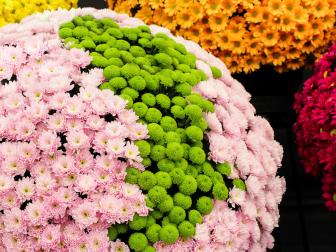
13 Eye-Catching Chrysanthemum Color Combos 13 Photos
Celebrate the variety of mum colors with these creative mixes.