



 You're subscribed!
Bear's Breeches

Plant type: Herbaceous perennial
Hardiness: USDA Zones (6)7 to 10
Plant size ranges from three to four feet tall and as wide.
How to use it: In masses or as a specimen plant. Use in the middle to the back of a mixed perennial border. Combine in contrast with fine-textured perennials, like ferns, that would benefit from the backdrop of this plant's foliage. Or pair with other bold foliage plants, like gunnera. Although they may not bloom at the same time, bear's breeches' flowers complement purple pineapple lily (Eucomis 'Sparkling Burgundy', USDA Zones 6 to 9), combining dramatic purple foliage with the spiky bloom that resembles a pineapple. Can be used as a fresh or dried cutflower.
Culture: Prefers a well-drained site; suffers in poorly draining soils. Plant in full sun (in cooler climates) to partial shade. In northern climates, heavily mulch plants to protect against winter injury. Deadhead flowers once it has finished blooming to keep foliage looking good. Propagated through seed, root cuttings or division. Benefits by division every three to five years in spring. When being divided, fleshy root fragments may be left behind and will grow into new plants. No serious pest or disease problems, but may have slug and snail problems.
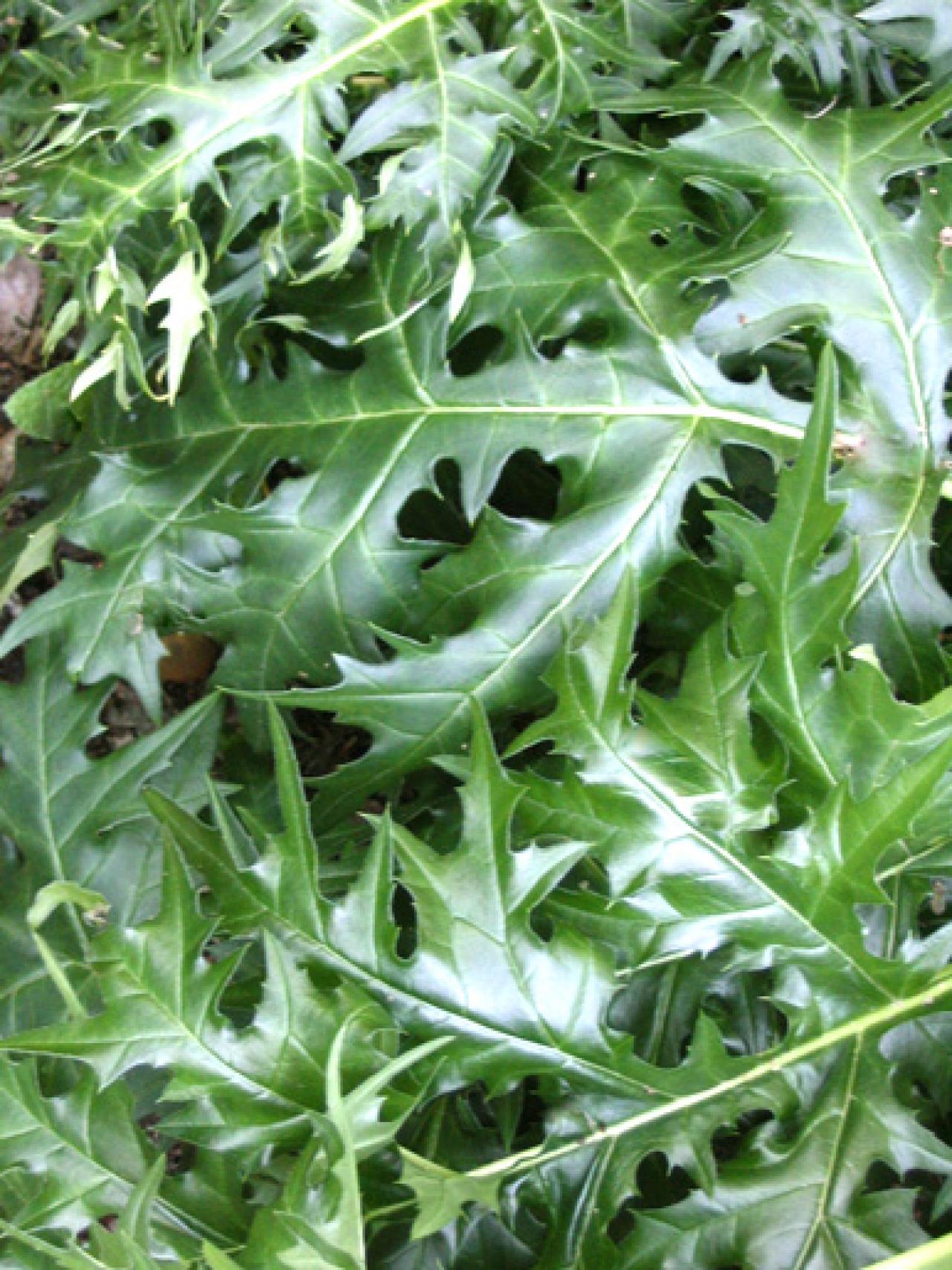
Special notes: Valued for its bold foliage and impressive flower spikes. Bear's breeches is aptly named for certain species' large and hairy leaves. The leaves inspired the designs for the head (or capital) of Greek Corinthian columns. Warning: Due to its spreading underground root system, this plant can become invasive, especially in the West.
Selected Species and Cultivars
- Common bear's breeches (A. mollis). Foliage is broader and more rounded than A. spinosus.
- Spiny bear's breeches (A. spinosus). Produces more blooms and has a distinctly more dissected, thistle-like foliage than A. mollis. Leaves may look sharp but are, indeed, not.
- A. spinosus 'Spinosissimus'. Considerably more spiny and vicious than its counterparts. May want to keep pets and small children away from this plant.