

Assembling a Compost Bin
Paul James puts together a compost bin that he hopes will be his last.
- A
- A
- A
Print Options
CloseE-mail This Page to Your Friends
xSuccess!
A link to %this page% was e-mailed
Over the years, master gardener Paul James has used a variety of compost-containment systems, from simple piles to fancy bins, but he has never been thrilled with any of them. They all produced compost well enough, but each had various shortcomings.
Now he has found a new compost bin that he hopes will be his last. It's modeled after one designed by Sir Albert Howard, a 20th-century English gardener often called the "father of composting." (Of course, there are historical references to composting dating back thousands of years, but Sir Albert perhaps can be credited with making the practice more popular.)
The bin itself is a simple structure consisting of metal corner posts onto which you attach boards. The boards are ideally made of rot-resistant lumber, such as cedar or redwood. You could also use spruce or pine, but in that case, you should treat the boards with a non-toxic preservative. The boards are angled inward, which helps funnel the rain into the bin, and there's sufficient space between them to allow for good air flow.
The dimensions of the bin are ideal. Unless a bin is large enough, it won't generate enough heat to drive decomposition. The manufacturer recommends that the bin be 4 feet square, but Paul decided to make his a little bit bigger, as in 5 feet by 4 feet.
Assembling the bin is easy. The boards simply slide into the posts and are attached using the supplied screws. The top three boards at the front of the bin are not attached, however, so that you can easily remove them to access the interior of the bin. Start to finish, Paul put this bin together in just 30 minutes by using a cordless power drill.
Finding the right spot
Deciding on a location for a compost bin can be challenging. First and foremost, a compost bin needs to be conveniently located or you'll never use it. It also needs to be clear of trees, whose roots will invade the rich material and suck the nutrients right out of it. Placing the bin near a water source is a good idea as well, because periodically you'll need to give it a shot of moisture. Finally, it needs to be in a spot that gets at least a half day of sun or it won't heat up properly.
After examining his two acres for a good spot, Paul realizes that he doesn't have a single location that fits all those criteria. So he must compromise on a spot that's convenient, is near water and gets a good deal of sun. Unfortunately, there's also a large tree nearby, but that's okay because he ultimately plans on having the tree removed to make room for a new greenhouse.
Establishing the compost pile
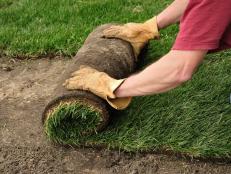
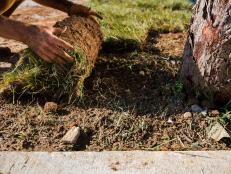
Once the location for the compost bin has been determined, it's time to get rid of the grass. A compost pile or bin needs to sit on bare soil so that soil organisms, like earthworms, below can work their way into the pile and do their magic.
When the grass has been removed, place the bin on the ground and begin filling it. Paul begins with a small bale of straw, followed by a mix of leaves, old potting mix, grass clippings and other organic matter that he has collected over the past few weeks.
Then he activates the pile with a shovel full of compost. Remember, compost should contain a mix of carbon-based materials — best thought of as brown stuff, such as straw and leaves — and nitrogen-based materials, or the green stuff, such as grass clippings and kitchen scraps.
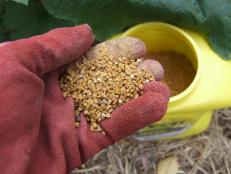
In his case, Paul has more brown stuff than green stuff, so he sprinkles the pile with blood meal, which is pure nitrogen, just to balance things out a bit. Then he adds water to get the right moisture content — not too wet, but definitely not too dry, either — and fluffs the pile with a fork. Now he is ready to add more things to the compost pile.
Cold frame
A cold frame allows Paul to get a jump on spring planting and extend his growing season into the fall and winter. In summer he replaces the clear poly film with shade cloth to protect plants from the blazing sun.
He bought two of these frames, and they were fairly easy to install. The kit, which is designed to fit a 4' x 8' bed, comes complete with galvanized steel stakes, rafter pipes, poly film and all of the necessary hardware.
All you do is drive the tapered end of the stakes into the ground with a hammer. Then join two sections of pipe together, and slide their ends into the stakes. Next, lay the poly film over the sections of pipe and attach it using the special clips provided.
Inside the cold frame, fall veggies will be protected even when the ambient air temperatures drop to about 25 degrees F. During warm spells in the fall season, roll up the poly film on the sides of the cold frame and attach it with tape to allow more air flow through the frame and prevent the veggies from cooking inside.
In winter, once the veggie harvest is over, he'll use these cold frames to house his bonsai collection. To do this, he'll place the bonsai in the beds and cover them with pine bark mulch or shredded leaves up to the tops of the pots. Then, when warmer temperatures arrive, in about late February or so, he'll remove the bonsai and get ready to plant more veggies. In the spring, he'll be able to get at least a two-week head start on the growing season.
We Recommend...
Keeping Grass Out
Master gardener Paul James shares tips for controlling stray grass growth.
Thought you had it covered?
Tell us what you need, and we'll help you find the best service providers in your area.
Shop Home Decor Products
Shop home decor products from rugs to mirrors, lamps and more