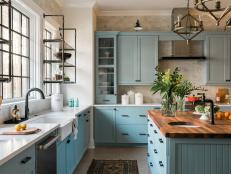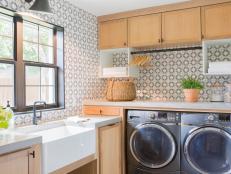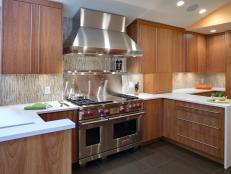

Organized Kitchen Activity Centers
In the kitchen, there's a primary rule: tools that work together should live together. Carry out this rule by creating activity centers in the kitchen: centralized places that group and organize tools needed for routine kitchen activities.
- Excerpted from Houseworks, by Cynthia Townley Ewer
- A
- A
- A
E-mail This Page to Your Friends
xSuccess!
A link to %this page% was e-mailed
Mixing Center
In the words of an old song, "Can she bake cherry pie, Billy Boy, Billy Boy?" She can — if her organized kitchen includes a well-planned mixing center.
The focus: mixing, preparing and assembling food. The mixing center is the place where cookie dough and piecrusts, marinades and muffins make their appearance. Star player in the drama will be the electric mixer, with supporting roles filled by measuring cups, baking supplies, canisters and sifters.
The mixing center is the most movable of all the kitchen activity centers. Since it's not tied to a fixture, such as the sink or stove, it can be located in any designated area with counter space available. Storage includes cabinet, drawer and wall areas around the designated counter space.
Other Items Found at This Center:
Food processor, automatic bread machine, mixing bowls, batter bowls, mixing spoon, rubber spatula, rolling pin, cookie cutters, biscuit cutters, herbs and spices, shortening, sweeteners, cupcake papers, cake decorating tools
Dishwashing/Tableware Center
The meal is over and it's time to clean up — and turn to the dishwashing/tableware center to get the job done. Chances are, this activity center will lie right next to the cutting center, since both share the kitchen sink as a designated space and use the same washing tools. The automatic dishwasher is the second compass point for this activity center.
The center's focus is the washing and storage of dishes and tableware — in a manner that will help family members to get the job done fast. Find storage for these items in drawers and cabinets convenient to the dishwasher. Shelf paper helps prevent scratching when putting dishes away; plastic skid-resistant shelf-liner cushions delicate china and glasses, preventing breakage. Assign dishes a home according to their function and use. Just because you purchase dishes as a set doesn't mean you should store them that way. A "breakfast shelf" holds cereal bowls, salad plates and mugs — and lets children set the breakfast table each morning.
Seldom-used serving dishes live in the inaccessible way-back of the cabinet shelf, while plates and soup bowls enjoy the air and light of the shelf front.
Keep plastic food storage containers nested and handy. They'll help build the next day's lunches from the evening's leftovers. Corral lids separately in a plastic basket or drawer to prevent fallout — the descent of multiple containers onto your feet when the cabinet door is opened.
Other Items Found at This Center:
Cutlery (knives, forks, spoons), serving utensils, napkins, dishpan and dish drainer, rubber gloves, liquid dishwasher detergent, hand towels, dish towels
Enlarge Photo+Shrink Photo-DK - House Works © 2010 Dorling Kindersley LimitedExcerpted from Houseworks, by Cynthia Townley Ewer
Text Copyright © 2006, 2010, Cynthia Townley Ewer, extracts from Houseworks, reproduced with permission from Dorling Kindersley Limited
More From Organizing and Storage
Top Tips for Organizing the Bedroom
Arrange bedroom furniture, storage and lighting with these tips from the experts at HGTV.
Decluttering the Entryway
Organized entryways with helpful tips from HGTV experts on door areas.
Top Tips for Organizing Children's Rooms
HGTV.com shares tips for bringing order to children's rooms and play areas.
See Also:
From our Sister Sites:
- 8 Budget Kitchen Lighting Ideas (from DIY Network)
- Kitchen Cabinet Design Ideas (from HGTVRemodels)
- Kitchen Color Design Ideas (from DIY Network)
Shop Homekeeping Products
Shop homekeeping products from organizers to cleaning supplies and more