

Refinishing Kitchen Cabinets
Why buy new cabinets when you can save money by customizing your own?
- A
- A
- A
Print Options
CloseE-mail This Page to Your Friends
xSuccess!
A link to %this page% was e-mailed
For a little money and work, you can turn an old, outdated kitchen...All About
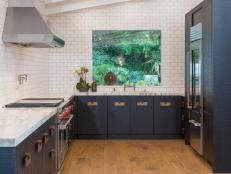
As you might expect, custom cabinets are expensive. However, you can give your kitchen a custom look for a lot less money. A typical refinishing job costs about $200 — much less than the cost of custom cabinets.
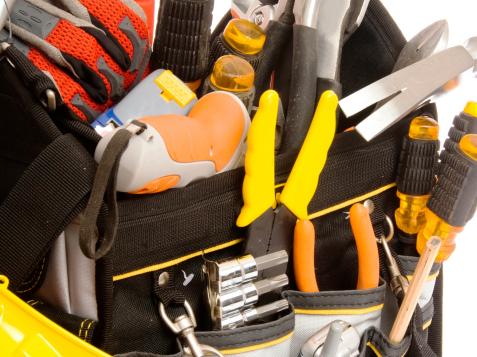
Materials and Tools
Phillips- and flat-head screwdrivers
Drill, with drill bits
New hinges and handles
Random-orbit sander and 100-grit sandpaper
Vibrating sander and fine-grit sandpaper
Sanding block and 60-grit sandpaper
Large plastic sheet
Paintbrush
Oil-based primer
Oil-based paint
Wood putty
Safety glasses
Dust mask
Removing the Old Finish
- 1. Remove the doors, hinges and handles from the cabinets.
- 2. Sand the doors and cabinet frames. Before you begin, hang plastic sheeting over the doorways to prevent dust from spreading throughout the house (figure A). Use a random-orbit sander with 100-grit paper to remove the old finish and a vibrating sander to give the wood a smooth surface. (Some random-orbit sanders can be attached to a wet/dry vacuum cleaner to minimize dust.) For grooves and other tight areas, use a sanding block or a detail sander with 60-grit paper. Be careful not to round off any square edges while sanding.

Painting Cabinets
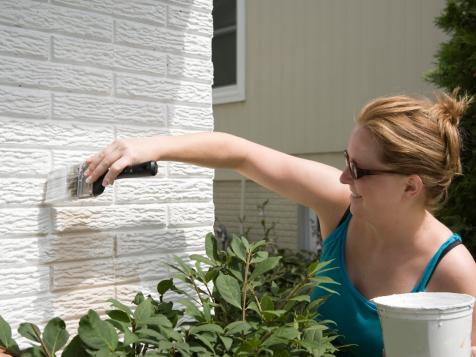
- 1. Apply a coat of oil-based primer to the cabinets and doors. Keep the coverage as consistent as possible. The primer will prevent the wood from soaking up too much paint. A primer/sealer does double duty by preventing stains from showing through.
- 2. Use long, even strokes to apply a coat of oil-based paint to the cabinets and doors. For cabinets, oil-based paint is preferable to latex paint because it dries harder and has less tendency to stick to your dishes. Be sure you have good ventilation when using oil-based paints.


Tips
- Don't pinch pennies when buying paint and equipment. More expensive paints will last longer and be easier to apply. Better brushes allow you to paint more smoothly .
- Paint the backs of the cabinets first (figure B). That way you won't coat your arms with paint.
If the hinges are not self-squaring, use a square to draw a reference line (figure D), and line each hinge up with the line. The hinges should be placed 2" above the bottom and 2" below the top of the door.