
Steps to Make a Paver Entryway
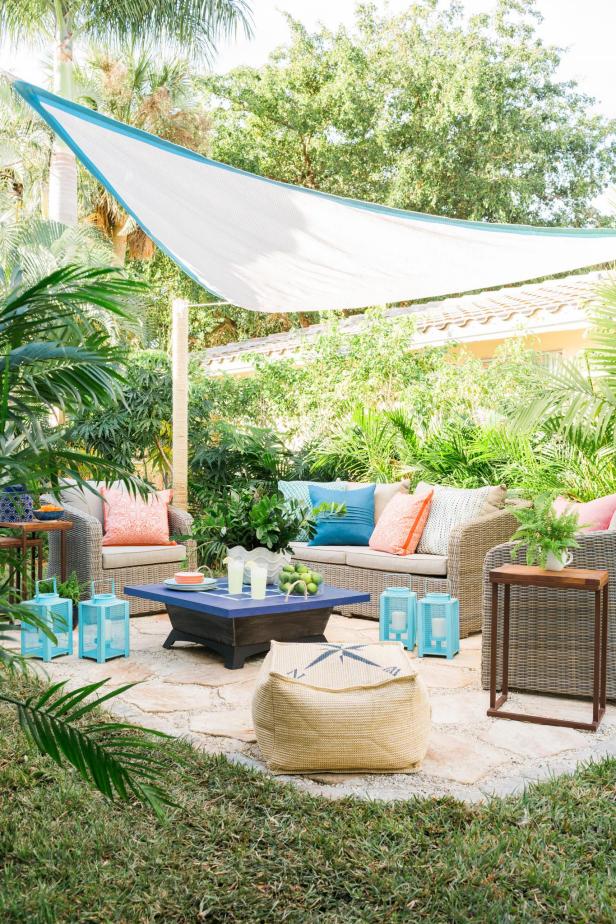
Interlocking concrete pavers give this patio and walkway added charm and beauty at a fraction of the cost.
- A
- A
- A
Print Options
CloseE-mail This Page to Your Friends
xSuccess!
A link to %this page% was e-mailed
Figure MPaving stones have been used for thousands of years. The Romans used them to build roads, some of which are still in use today. Instead of chiseling pavers out of rocks like the Romans did, host Ken Bastida shows how to use manufactured interlocking pavers to build a beautiful patio and pathway, lined with an artful arrangement of colorful plantings.
Homeowner John Rude has a long concrete front entryway (figure A), but the concrete is cracked and dull, so he wants to dress it up with the look of old cobblestone. Landscape designer Dan Berger creates all the charm of an old-fashioned cobblestone walkway at a fraction of the cost by using interlocking pavers. The pavers are made of high-strength concrete molded to look like old, used cobblestones. He creates a new entry to the front door, widening the area for a comfortable seating area and adding a lot of charm.
Pavers come in a variety of shapes, sizes and colors (Figure C), so they offer a lot of versatility. They can be used in many types of settings, from formal to informal, to add an artistic flourish to any yard.
Berger estimates that a professional would charge $3,600 to design and build a entryway of interlocking pavers (not including the cost of plants), but do-it-yourselfers can complete the project for only $1,500 in two weekends. He gives this simple project a 2 on a scale of 1 (easy) to 5 (hard).
Step One: Preparing the Site
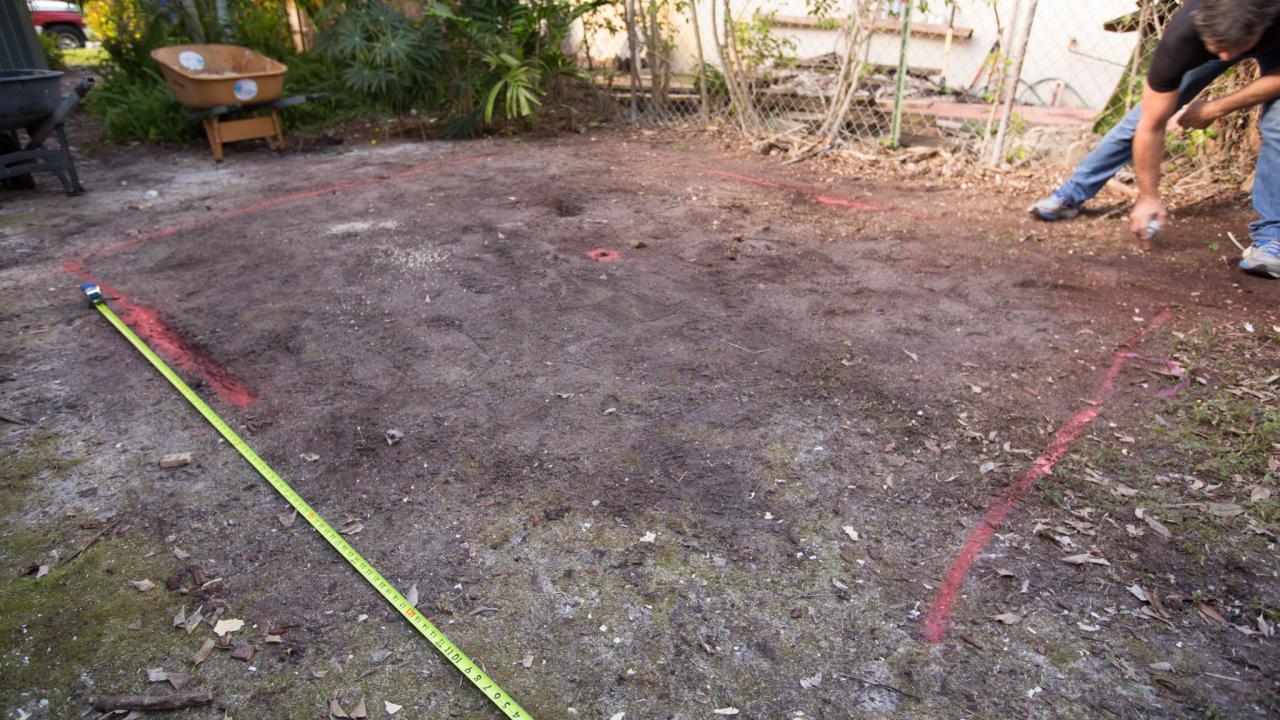
The easiest way to break up a lot of concrete is with a jackhammer, available to rent for $50/day. So, if you have an existing walkway or patio, just break the concrete slabs into pieces and remove them.
Dig out the walkway site about 8 to 10 inches below grade for the foundation and pavers. The crew used a skip loader to dig, but you can save $185/day by digging out the site with a shovel.
Step Two: Filling in the Base Rock
For the foundation, contractor Craig Matthews starts with base rock, available at building supply stores for 50 cents per square foot. It gives the walkway more strength and prevents it from slipping or sliding.
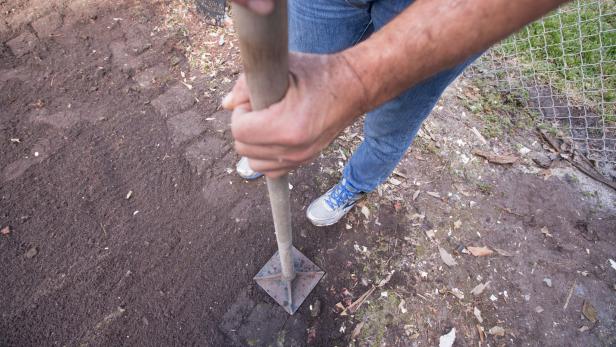
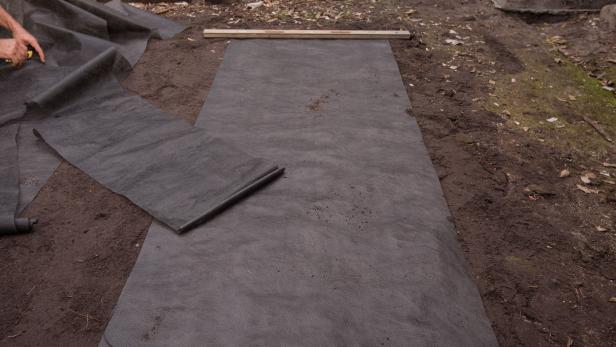
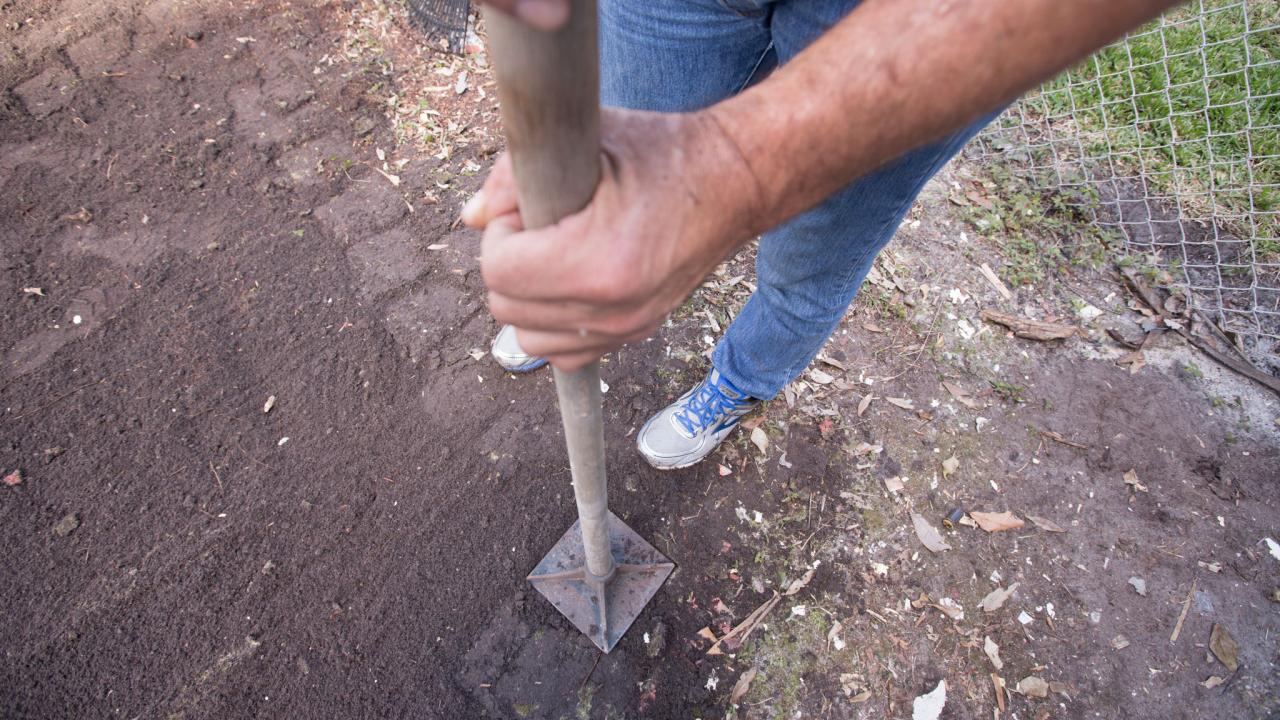
Lay down a layer of geotextile fabric ($30 for a 40' x 20' roll), which will keep soil from moving or expanding into the base rock. With the help of a friend, spread out the base rock to a thickness of about 6 inches. Compact the area with a vibratory plate compactor (available to rent for $50/day) to level and strengthen the foundation (figure D).
Step Three: Leveling the Surface
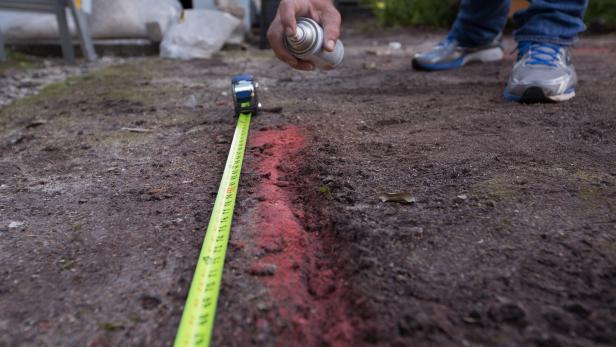
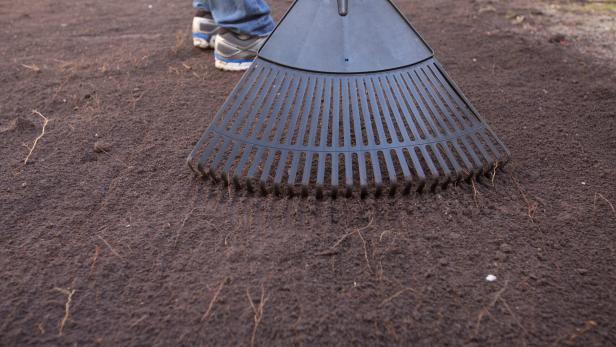
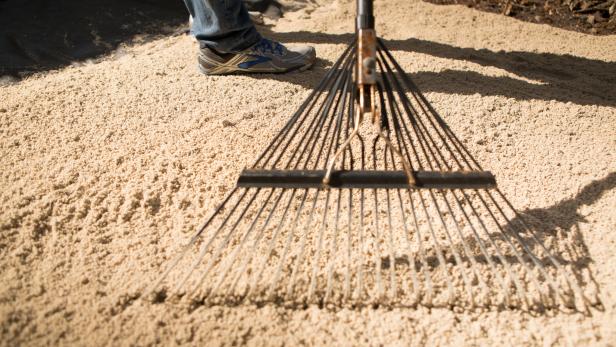
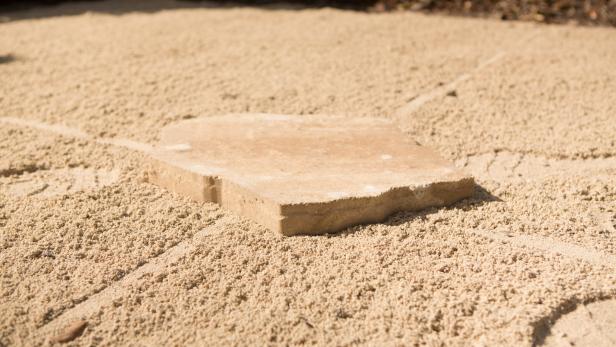
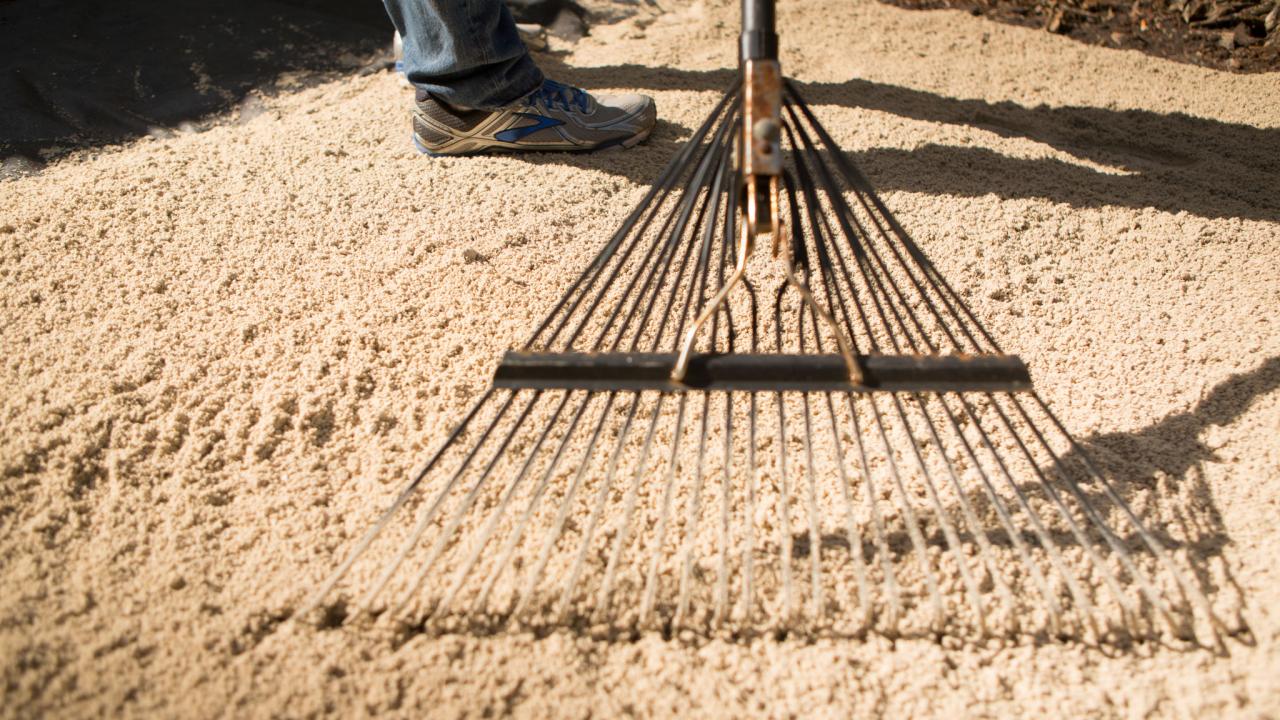
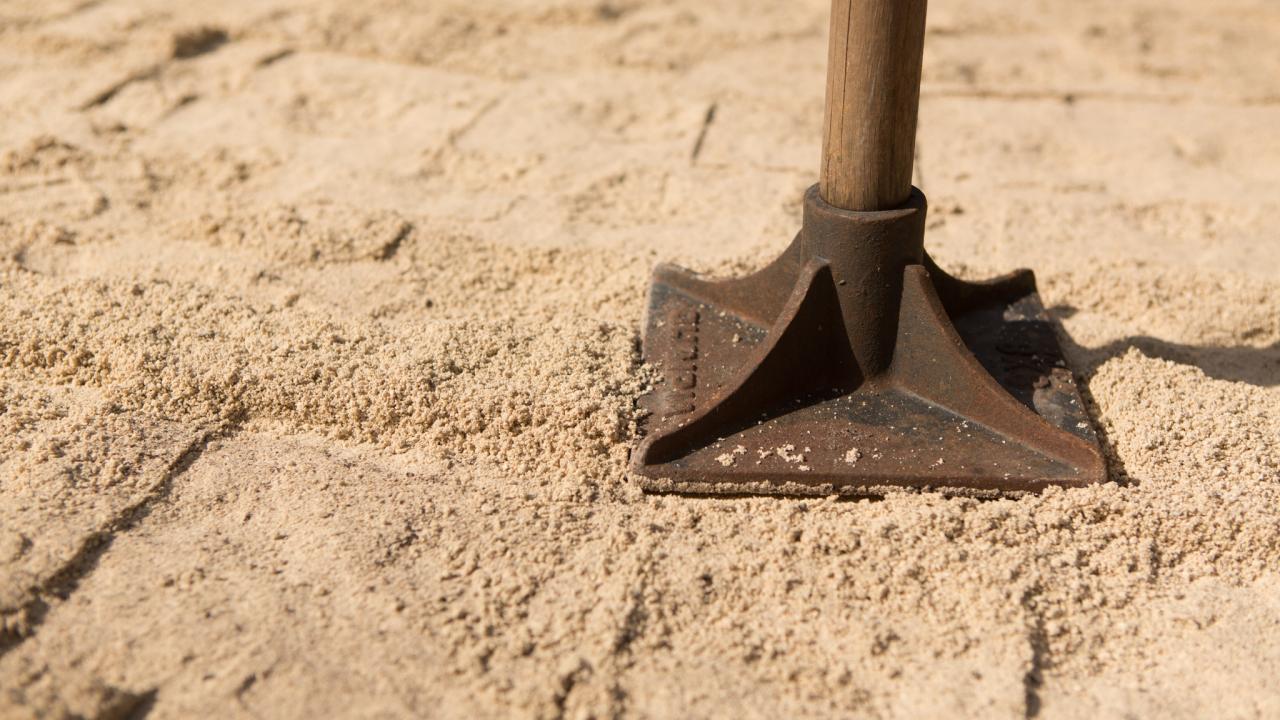
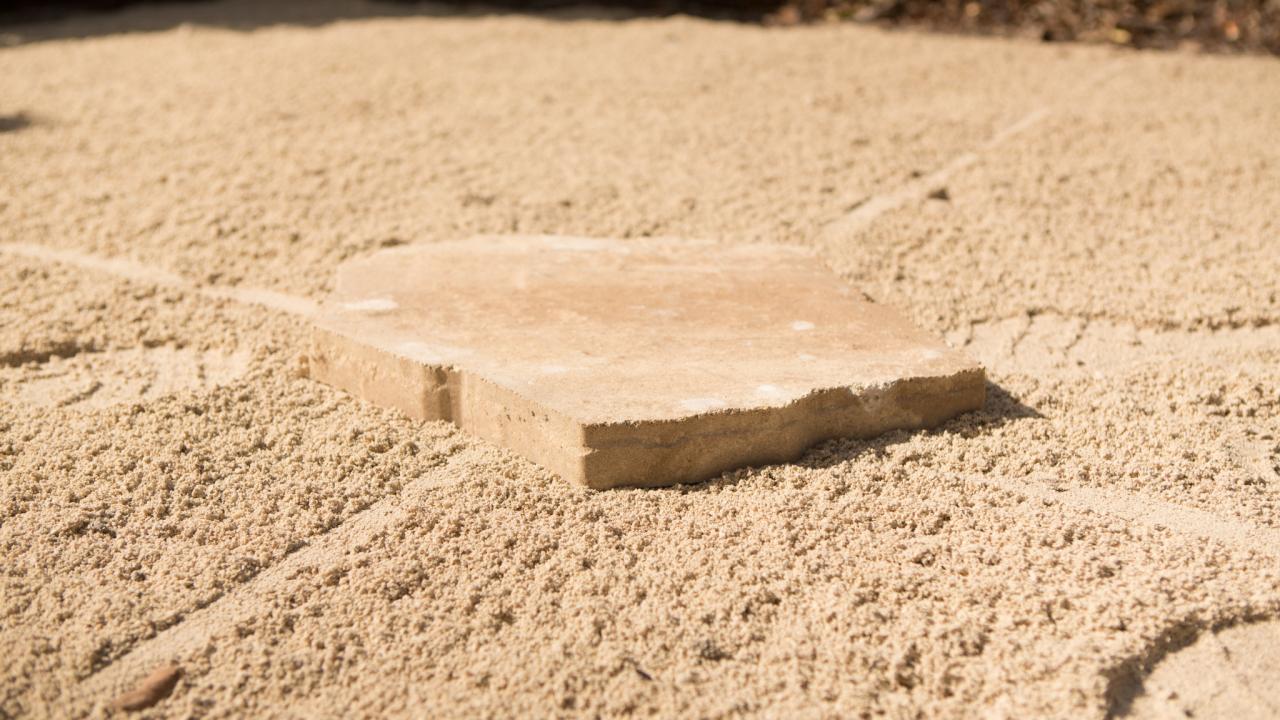
Craig uses a fine crushed rock called quarter-by-dust (25 cents per square foot) to smooth out the rock base. Hammer in some stakes along the perimeter. Tie a string line across the path 5 inches off the ground, between two stakes, and make sure it's level. Spread out a 2-inch-thick layer of the quarter-by-dust to serve as a bed for the pavers. Run a vibratory plate compactor over the dust to pack down the surface. Now that all the base materials are down (figure F), you're ready for the pavers.
Step Four: Placing the Pavers
Paver expert Mark Wagner says that some interlocking pavers offer a natural stone look at less cost than actual stones. Pavers run from $2 per square foot to $4 for larger tumbled pavers. For this project, Mark chooses two sizes of tumbled pavers in shades of gray and brown.
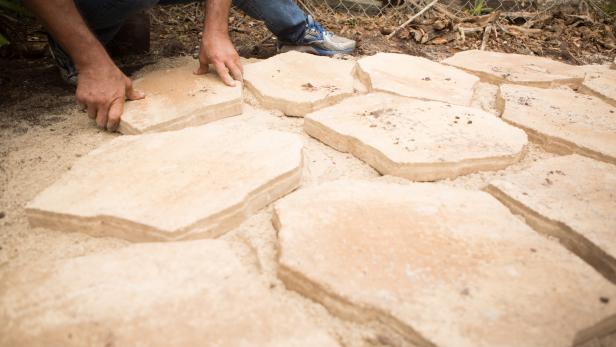
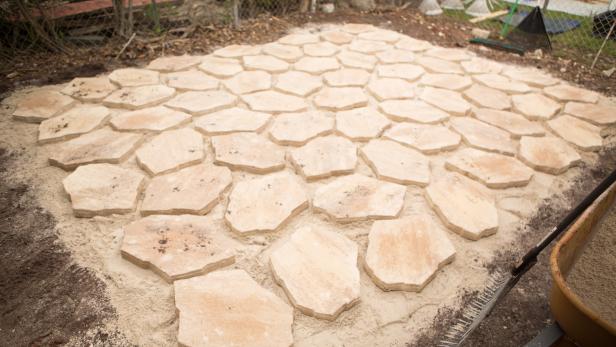
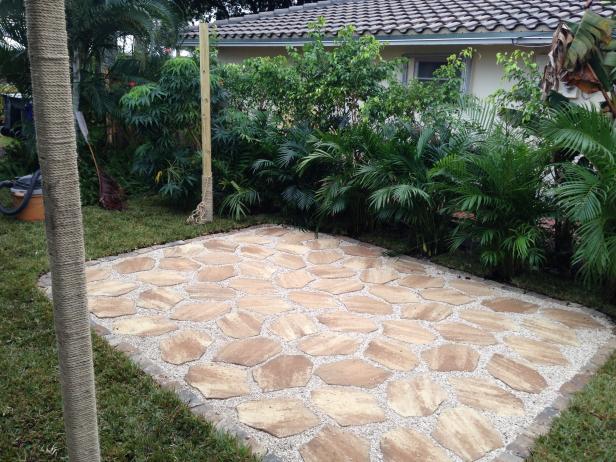
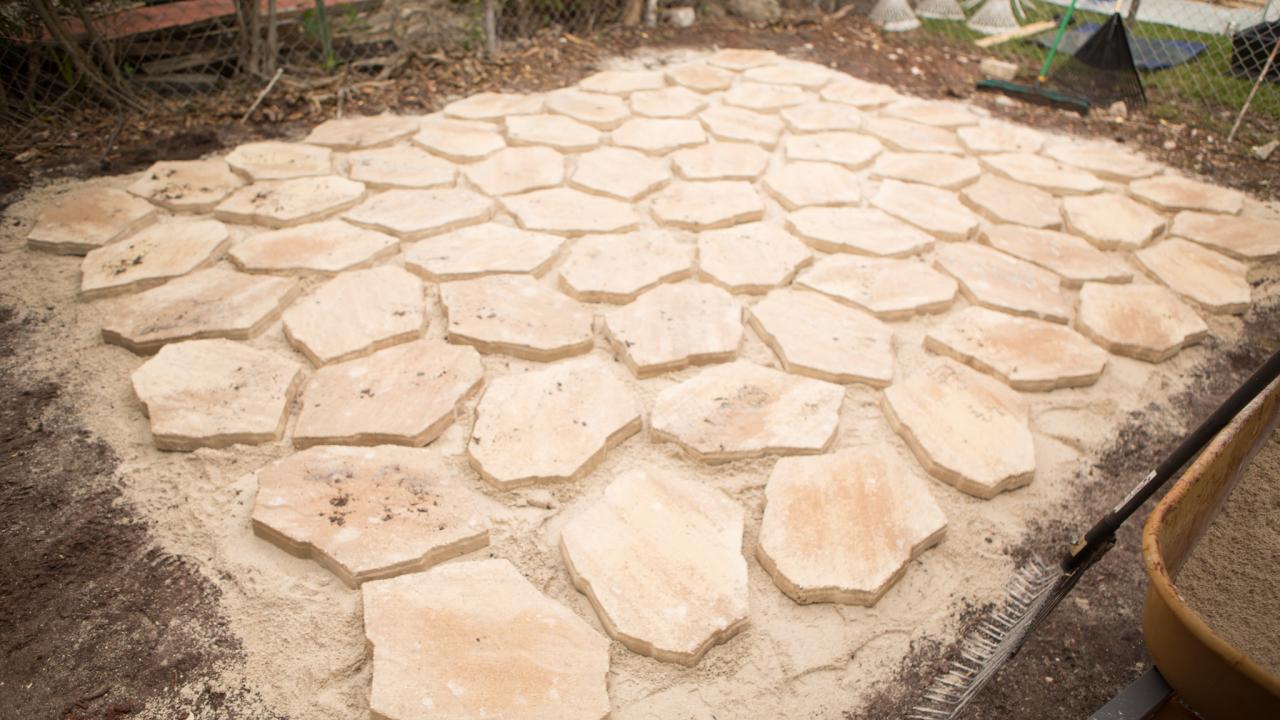
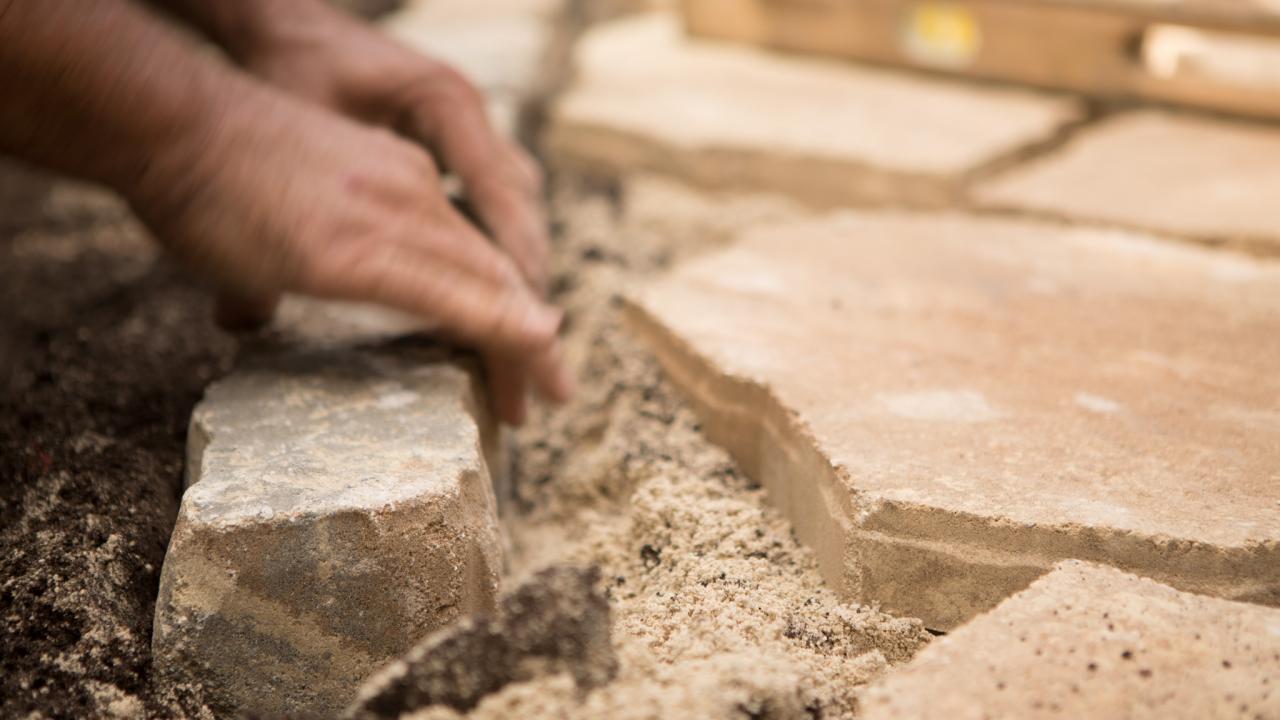
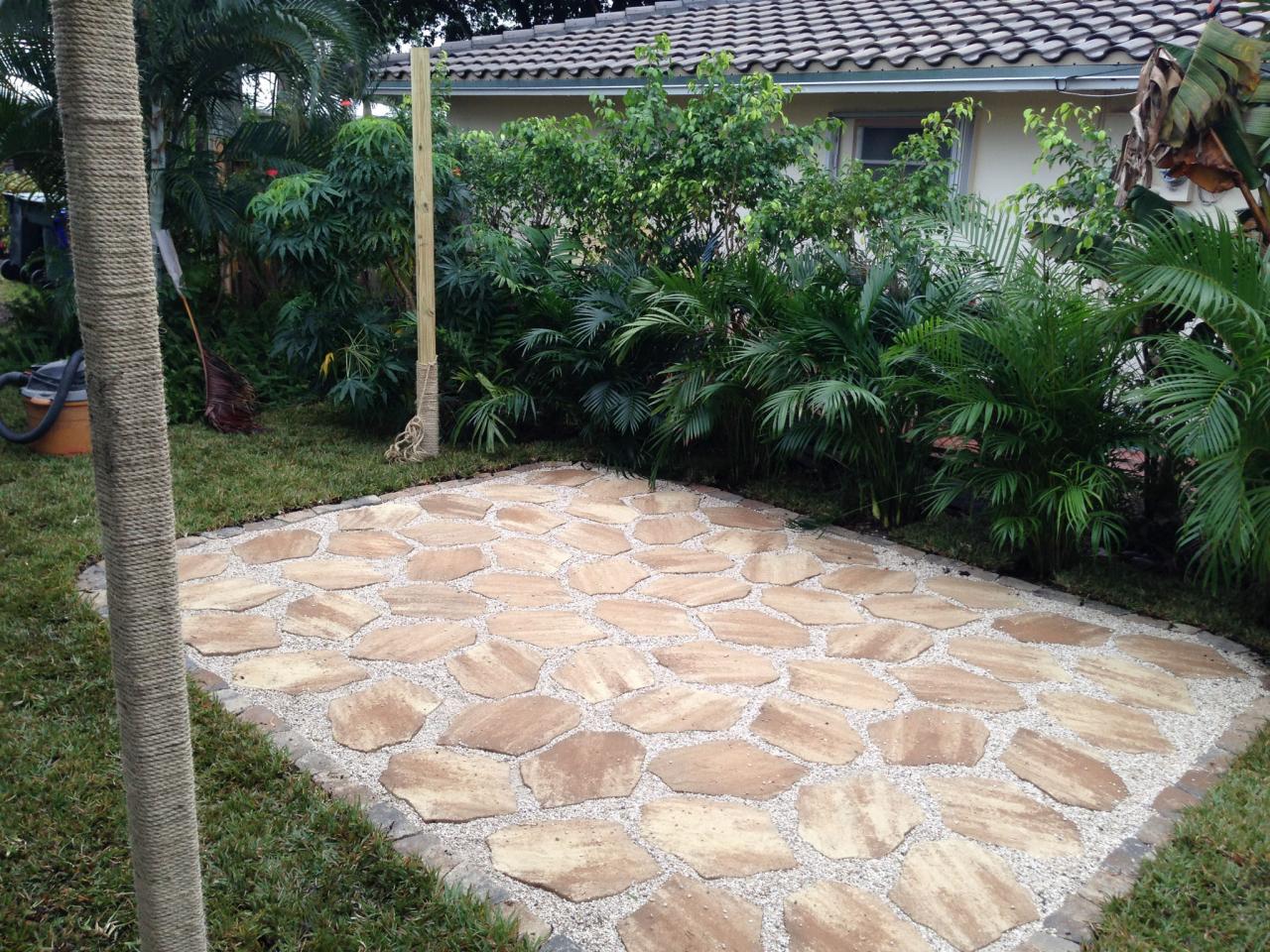
To give the entryway an authentic Old World cobblestone look, lay out the pavers in a random pattern that varies the size, color and shape to create a surface with lots of texture and interest. Simply set the pavers up against each other for a snug fit (figure G). Work your way out, covering the patio and pathway area.
As you near the end, if you have any odd-sized gaps, cut those pavers for a perfect fit. Figure I shows a close-up of the completed pathway.
Step Five: Locking the Pavers
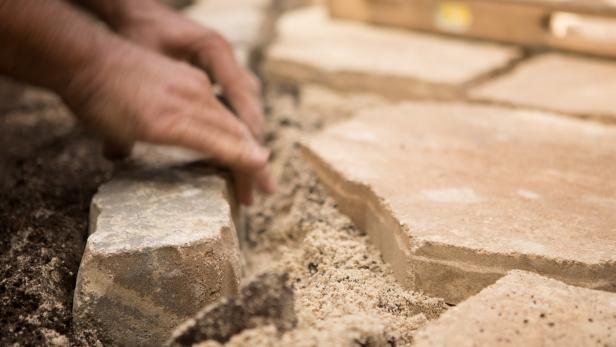
Spread a 2-inch-thick layer of concrete (figure J) against the outside edge of the paver walkway to provide extra stability. Allow the concrete to set for 24 hours, and then add sod or plants to disguise the concrete.
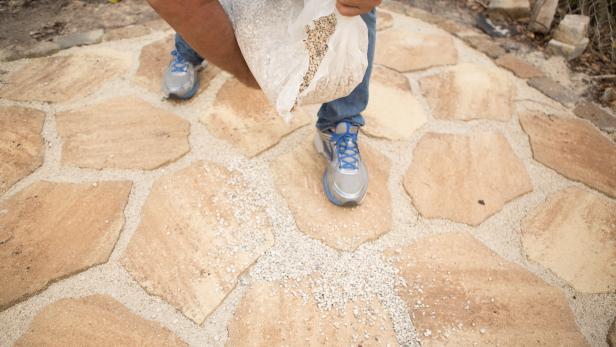
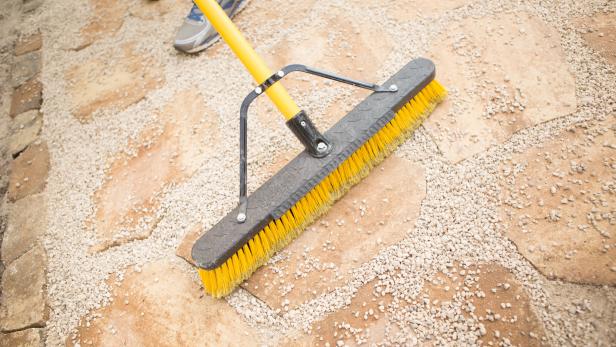
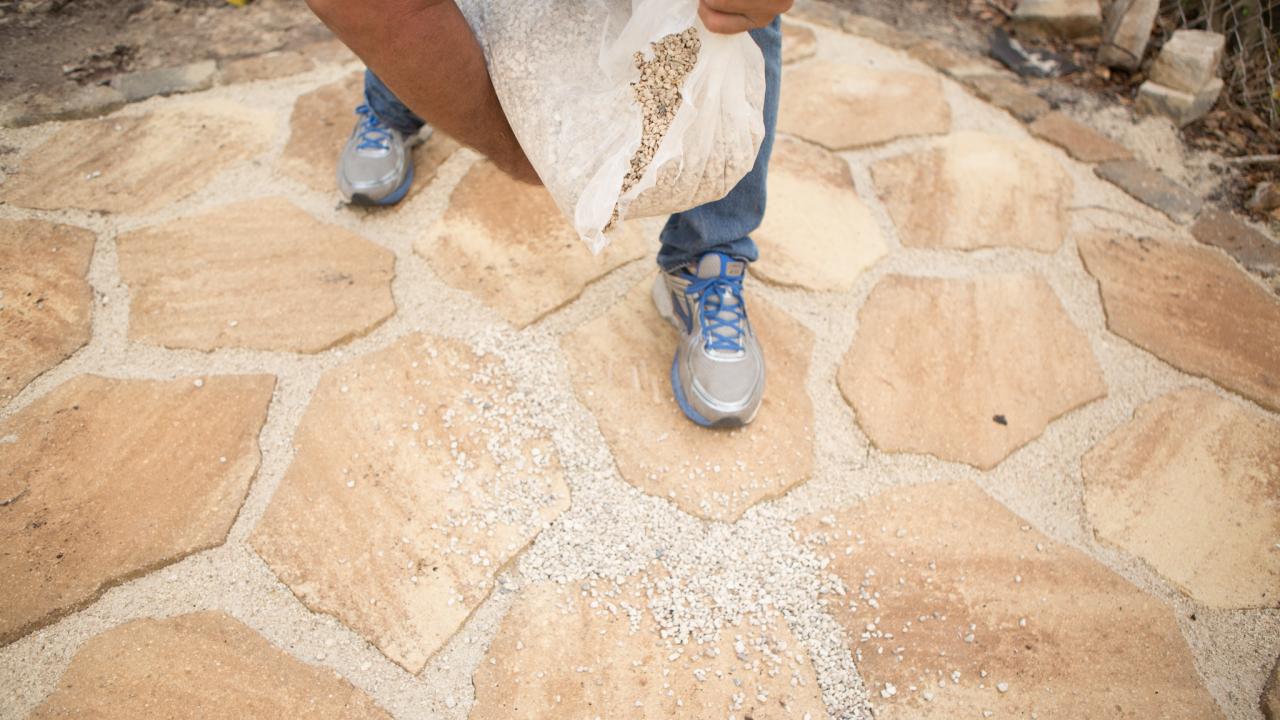
Pour some silica sand ($5/bag) onto the path and patio and sweep it into the joints between the pavers to lock them in place. Run the vibratory plate compactor over the pavers to pack in the sand and lock the pavers tightly together.
Planting: An Inviting Entryway
Because this is an entryway, Dan wants to make a great first impression with lots of color and texture. He chooses a variety of colorful, drought-resistant, low-maintenance plants to line both sides of the walkway. He also continues the landscaping up a nearby slope to screen the retaining wall and enclose the area. He edges the walkway with plants in purples, pinks and yellows, and a few spiky plants are added for contrast. His planting plan includes:
- Lavandula angustifolia 'Munstead', a fragrant plant with a long blooming season (Zones 5-8)
- Lavandula dentata, slightly fragrant, lavender-blue flowers that bloom in late summer (Zones 8-9)
- Coreopsis grandiflora 'Early Sunrise', deep yellow flowers (Zones 4-9)
- Phormium 'Yellow Wave,' long, sword-like blades striped yellow and green (Zones 9-10)
Keep in mind that lavender attracts bees, so don't plant it near walkways or kids' play areas if anyone in your family is allergic.
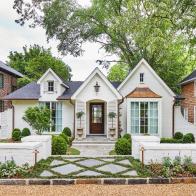
The completed cobblestone entryway (figure L) has an open and welcoming appearance. The tumbled pavers add an aged touch, and colorful blooms guide the way. A new bench and potted flowering plants enhance the Old World courtyard style.
We Recommend...
How to Make a Santa "The Morning After" Ornament
Follow these steps from Linda Hess to make your own santa ornament.
How to Make a Golden Garland Tree Reverse Applique Stocking
Both easy and fun, this stocking has the brilliant sparkle of metallic gold lame' fabric. The fabric adds an unexpected bit of...
How to Make a Trash Can
This trash container, built in two parts, is easier than it looks.
Shop Home Decor Products
Shop home decor products from rugs to mirrors, lamps and more